Sigiriya Rock Fortress: A Complete Guide to Sri Lanka's Ancient Lion Rock
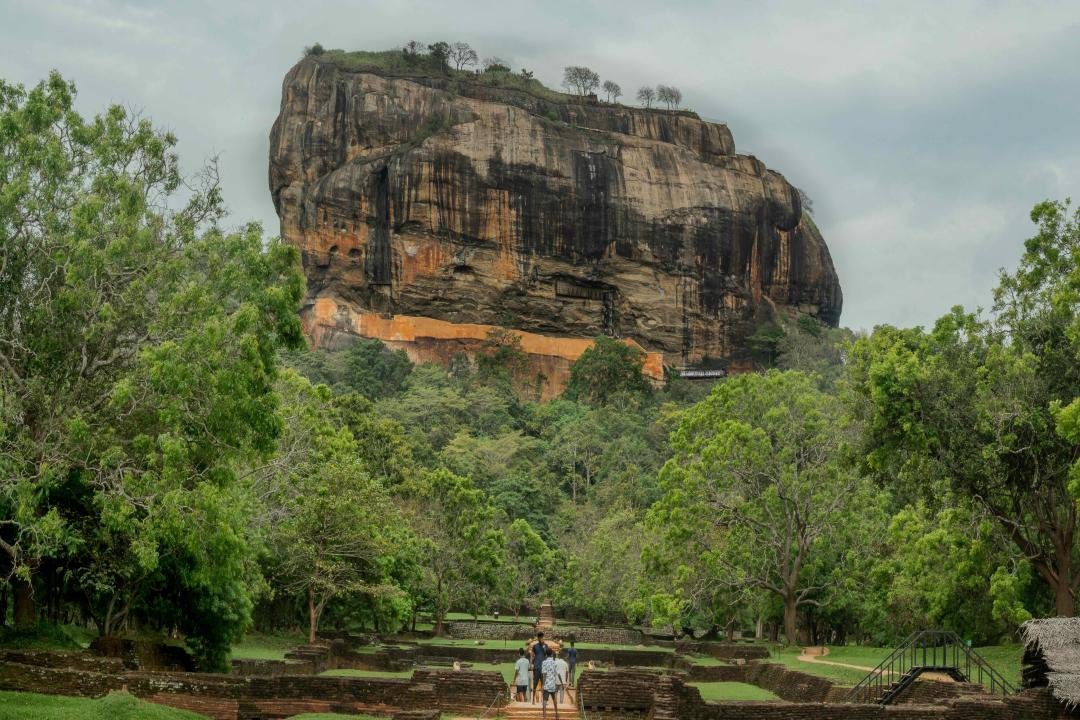
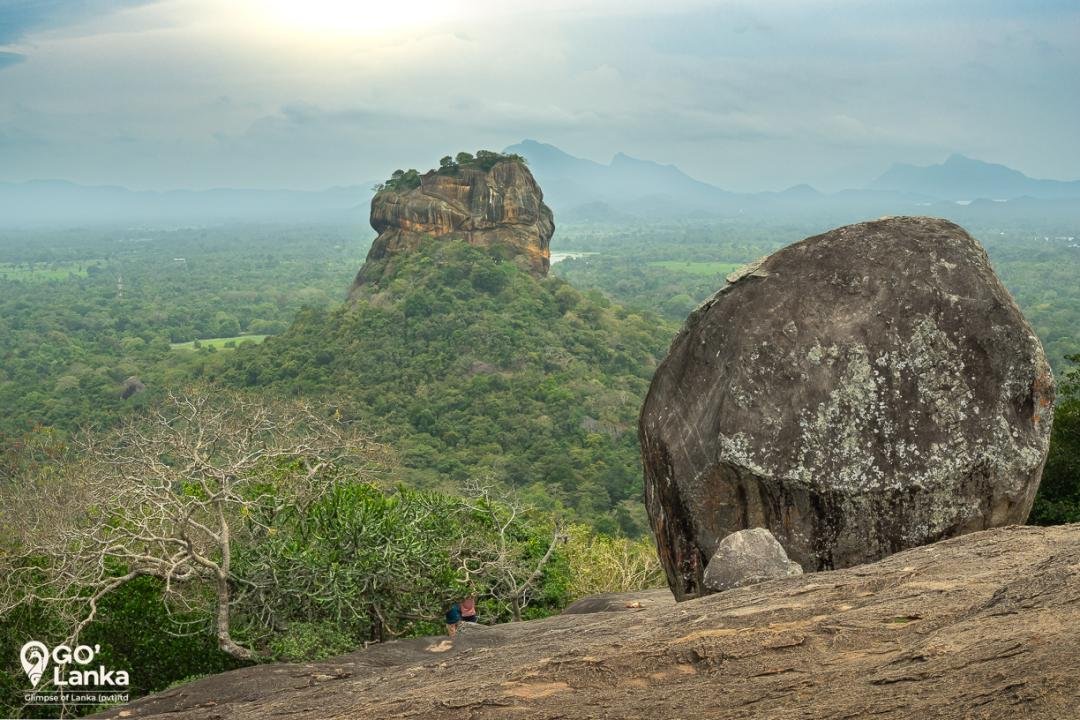
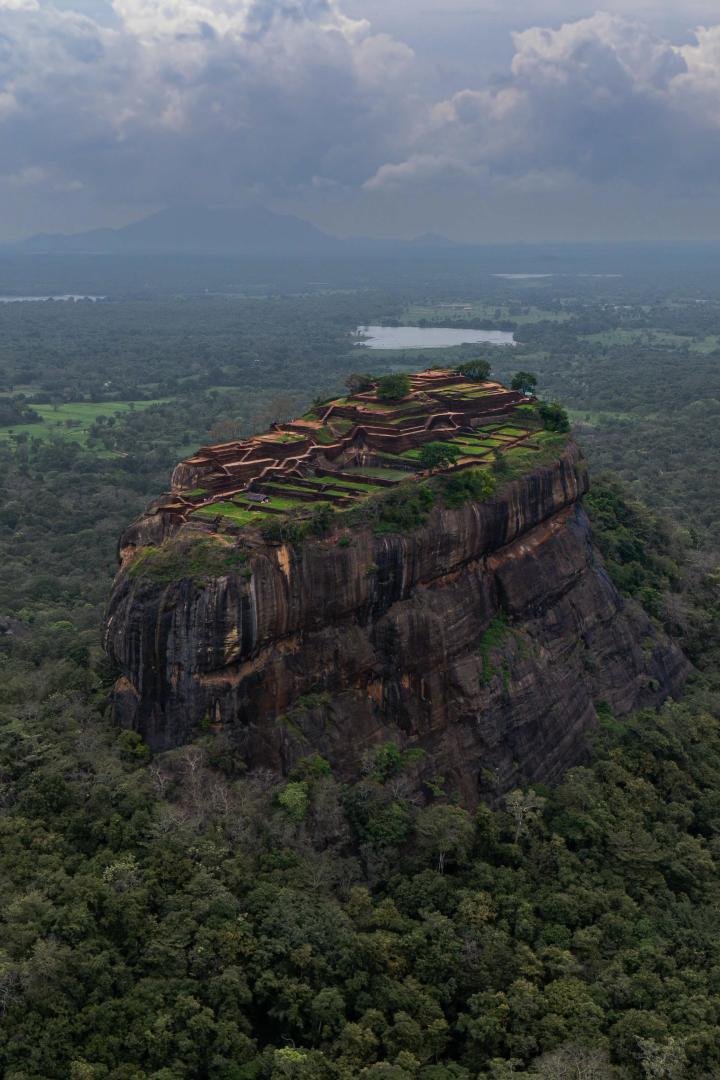
Sigiriya Rock Fortress is one of Sri Lanka's most famous landmarks. Rising 180 metres above the surrounding plains, this huge rock holds the remains of a 5th century royal palace, painted frescoes, water gardens, and a long staircase that leads visitors through a gateway shaped like a lion's paws. Sigiriya was named a UNESCO World Heritage Site in 1982, and it remains one of the top reasons travellers visit Sri Lanka's Cultural Triangle.
This guide covers the story behind Sigiriya, what you will see on a visit, and practical tips to help you plan your trip, especially if you are travelling from the United Kingdom or elsewhere overseas.
Where Is Sigiriya, and How Old Is It?
Sigiriya sits in the Cultural Triangle of Sri Lanka, between the ancient cities of Anuradhapura and Polonnaruwa, and close to Dambulla. The rock itself is far older than the buildings on it. It formed around 550 million years ago, when magma cooled deep underground and later became exposed as the softer rock around it eroded away. The rock is made of hard granite and migmatite, which is why it has survived for so long.
People have used the area around Sigiriya for thousands of years. Nearby, at a rock shelter called Aligala, archaeologists have found signs of a Mesolithic settlement around 5,000 years old. From around the 3rd century BC, Buddhist monks lived in caves on the lower slopes of the rock, and many of these caves still carry inscriptions recording gifts to the monks.
The Story of King Kashyapa and Sigiriya's Golden Age
Sigiriya's most famous chapter began in the late 5th century AD, after the death of King Dhatusena, a ruler known for building major irrigation works such as the Kala Wewa reservoir. Dhatusena had two sons. Kashyapa was older but born to a mother who was not of royal rank. Moggallana was younger but born to the queen, making him the rightful heir.
A palace dispute led to Kashyapa seizing the throne, and Dhatusena lost his life as a result. Moggallana fled to India, vowing to return. Kashyapa then made an unusual decision. Instead of ruling from the traditional capital at Anuradhapura, he moved his court to the top of Sigiriya rock and built a new palace there, naming it Sinhagiri, or Lion Rock.
For the next 18 years, Kashyapa ruled from this rock palace. This period, from around 477 to 495 AD, produced most of what visitors admire at Sigiriya today: the palace on the summit, the water gardens below, the famous frescoes, and the polished Mirror Wall. Historical records describe Sigiriya's design as a symbolic version of Alakamanda, the mythical city of Kuvera, the god of wealth.
Eventually, Moggallana returned from India with an army. According to the old chronicles, during the final battle, Kashyapa's elephant turned aside to avoid marshy ground. His soldiers mistook this for a retreat and fled. Left alone, Kashyapa took his own life. Moggallana then returned the capital to Anuradhapura, and Sigiriya was once again given over to Buddhist monks, who used it as a monastery until around the 13th or 14th century.
Rediscovery in Modern Times
After the monastery faded, Sigiriya disappeared from regular use for several centuries, though it was later used briefly as an outpost during the Kandyan period. Western interest in the site began in the 19th century. In 1831, Major Jonathan Forbes brought Sigiriya to wider attention, and he returned to climb the rock again in 1833. In 1875, T.W. Rhys Davids documented the famous frescoes, and in 1894, H.C.P. Bell carried out the first scientific excavations.
A larger research project, the Cultural Triangle Project, began work at Sigiriya in 1982, the same year the site received its UNESCO World Heritage listing. This project, directed by Professor Senake Bandaranayake, studied Sigiriya as a complete example of 5th century urban planning, engineering, garden design, painting and poetry, all in one place.
What You Will See: The Layout of Sigiriya
Sigiriya is far more than a rock with a palace on top. The whole site was laid out on a grand scale, covering roughly 2,750 metres from east to west and 925 metres from north to south, with the summit palace sitting at the centre of this plan. A visit takes you through several distinct areas before you even begin the climb.
1. The Water Gardens
Near the main entrance, you will walk through one of the oldest surviving large-scale gardens in Asia. The water gardens are arranged in a symmetrical layout known as a char bagh, or quartered garden, a design also seen in parts of Persia and the Mughal world, though experts are not sure if there is a direct link between them.
The first water garden has square pools and pavilions built around a central island. The second, sometimes called the fountain garden, has long pools and ancient limestone fountains. These fountains still work today, often spraying water during the rainy season, thanks to a clever gravity-fed system that has lasted more than 1,500 years. The third water garden marks the point where the formal, geometric layout gives way to the more natural boulder garden.
2. The Boulder Gardens
Beyond the water gardens, the path winds through huge natural boulders, many of which once supported wooden buildings. Look for cut grooves and holes in the rock surfaces, which once held beams and brick foundations. This area includes several interesting spots:
- The Cistern Rock, a large split boulder with a stone-cut water tank
- The Audience Hall Rock, where a flat stone surface holds a carved throne, thought to be where local chiefs met the king
- The Preaching Rock, covered in mysterious square cuttings whose original purpose is still debated by historians
3. The Frescoes and the Sigiriya Maidens
Partway up the rock, sheltered in a natural pocket of the cliff face, you will find Sigiriya's famous frescoes. These paintings, around 1,500 years old, are often called the Sigiriya Maidens. Today, only a small number survive, somewhere between 17 and 22 figures, though graffiti left by ancient visitors suggests there were once several hundred, possibly covering much of the western face of the rock.
The paintings show women from the waist up, painted in two main skin tones, a warm golden colour and a deeper blue-grey tone. Experts have never fully agreed on who these women represent, and several different theories have been put forward over the years:
- H.C.P. Bell suggested they were ladies of King Kashyapa's court taking part in a religious procession
- Professor Paranavithana proposed they were lightning princesses and cloud maidens, fitting with the idea that the whole palace represented the mythical city of the god of wealth
- Dr. Ananda Coomaraswamy identified them as apsaras, or celestial beings, a well known figure in South Asian art, often shown scattering flowers in celebration
Whatever their exact identity, the frescoes are remarkable for their realism and detail, and they are considered among the earliest examples of a distinct Sri Lankan painting style.
4. The Mirror Wall and Its Ancient Graffiti
Just past the frescoes, the path runs alongside the Mirror Wall, a section of polished plaster dating from the 5th century. It was originally so smooth and reflective that the king was said to be able to see his own reflection in it as he walked past.
Over hundreds of years, visitors to Sigiriya scratched short poems and comments into this wall. More than 1,200 pieces of this graffiti have been found, written mostly in old Sinhala, with some Tamil and Sanskrit. Around 685 were studied in detail by Professor Paranavithana in the 1950s. Almost all of them are about the painted maidens on the rock above, written by travellers who passed by centuries ago. A few examples give a real sense of how personal these messages are.
One verse describes a visitor who felt that the painted maidens had stirred feelings in him that he did not wish to share, so he chose to leave his thoughts behind rather than risk the artist somehow capturing them. Another, written by a monk, takes the opposite approach, describing a deliberately calm and detached state of mind, and asking the maidens not to direct any attention his way. This second verse is thought to be one of the oldest known pieces of Sinhala poetry written by a Buddhist monk, and it shows a side of Sigiriya that goes beyond royal history: real people, writing real reactions, well over a thousand years ago.
5. The Lion's Paws and the Final Climb
Higher up, you reach the Lion Terrace. This area takes its name from a huge lion-shaped gateway that once stood here, giving Sigiriya its old name, Sinhagiri, or Lion Rock. Today, only two giant stone paws remain, but in its time, visitors would have walked straight through the lion's mouth to reach the final staircase to the summit.
6. The Summit Palace
At the top, around 1.5 hectares of flat space once held King Kashyapa's palace. Little remains above ground level today beyond brick terraces, foundations, and a rock-cut throne facing east. Excavations have found roof tiles, iron nails, and other signs of a substantial wooden superstructure that has long since disappeared.
There is also a large rock-cut pool on the summit, thought to have been used for bathing, along with the remains of a smaller private garden. Despite centuries of study, exactly how this pool stayed supplied with water during dry periods is still not fully understood, adding one more small mystery to Sigiriya's long list.
Practical Tips for Visiting Sigiriya
Entrance Fees
Sigiriya is managed by Sri Lanka's Central Cultural Fund, and entrance fees for foreign visitors are set in US dollars, though you usually pay the local rupee equivalent at the gate. At the time of writing, the fee for non-SAARC foreign adults is in the region of US 30 to 35 dollars, with reduced rates for children and for visitors from SAARC countries. These prices are set by the government and can change without much notice, so it is always worth checking the official Central Cultural Fund website or asking your guide for the current rate before you travel.
Opening Hours and Best Time to Visit
Sigiriya is generally open from around 5 am to 6.30 pm, though tickets are usually only issued until about 5 pm, and the area with the frescoes tends to close slightly earlier than the rest of the site. Arriving early, ideally before 9 am, is strongly recommended. The early morning light is beautiful, the temperature is far more comfortable, and the site is much quieter before tour groups arrive.
Late afternoon, after around 3.30 pm, is another good option if you prefer a quieter visit and softer light for photographs. The middle of the day can become very hot, particularly on the exposed staircases, so it is best avoided if you can help it. Sri Lanka's main dry season, from around December to April, generally offers the most reliable weather for clear views from the summit.
The Climb: What to Expect
Reaching the summit of Sigiriya involves climbing around 1,200 steps in total, including some narrow metal staircases attached to the side of the rock near the frescoes and the Lion Terrace. The climb is not technically difficult, but it is steep, exposed to the sun in places, and can feel demanding in Sri Lanka's heat and humidity.
A few simple steps will make the climb much easier:
• Wear comfortable, sturdy shoes with good grip
• Carry plenty of water, and drink regularly
• Wear a hat and sun cream, as much of the climb is in direct sun
• Take your time and rest at the shaded sections and viewing platforms along the way
• Allow around two hours for a relaxed visit, including time at the top
If you are unable to manage the full climb, or simply prefer not to, the Sigiriya Museum at the base of the rock is a worthwhile alternative or addition to your visit. It uses models and audio-visual displays to explain the site's three main historical periods, and it is wheelchair-friendly, making it a good option on a rainy day or for anyone with limited mobility.
Other Things to Know
• Dress comfortably and modestly, as you may pass small shrines on the way up
• Toilets and a small café are available near the entrance, but not on the climb itself, so plan accordingly
• Photography is allowed throughout the site, though flash photography is not permitted near the frescoes
• The site can become busy with coach groups between roughly 9 am and 3 pm, so an early start helps you stay ahead of the crowds
Frequently Asked Questions About Sigiriya
How long does it take to visit Sigiriya?
Most visitors spend around two hours at Sigiriya, including the climb to the summit, time at the frescoes, and a walk back through the water gardens. Add extra time if you also plan to visit the museum.
Is the climb suitable for children or older travellers?
Many families and older travellers do climb Sigiriya, but it does involve steep steps and some narrow staircases. If you are unsure, an early morning start in cooler conditions makes a big difference, and the museum at the base offers a good alternative if the climb is not suitable for everyone in your group.
Can Sigiriya be combined with other sites nearby?
Yes. Sigiriya sits close to other major attractions in the Cultural Triangle, including ancient cave temples, royal cities, and national parks. Many travellers combine a visit to Sigiriya with one or more nearby sites as part of a wider day trip or multi-day tour.
Plan Your Visit to Sigiriya with Glimpse of Lanka
Sigiriya brings together natural history, royal drama, garden design, and centuries-old poetry in one unforgettable climb. Few places in the world let you walk through gardens that are over a thousand years old, stand beside frescoes painted before many European cathedrals existed, and read personal messages left by visitors from the 7th century.
If you would like help planning a trip that includes Sigiriya along with other highlights of Sri Lanka, our team at Glimpse of Lanka can put together a tailor-made itinerary based on your interests, pace and travel dates. Simply fill in our tailor-made itinerary form, and we will help you build a trip that brings Sri Lanka's history and culture to life.