Dambulla Cave Temple: A Complete Guide to Sri Lanka's Golden Rock Sanctuary
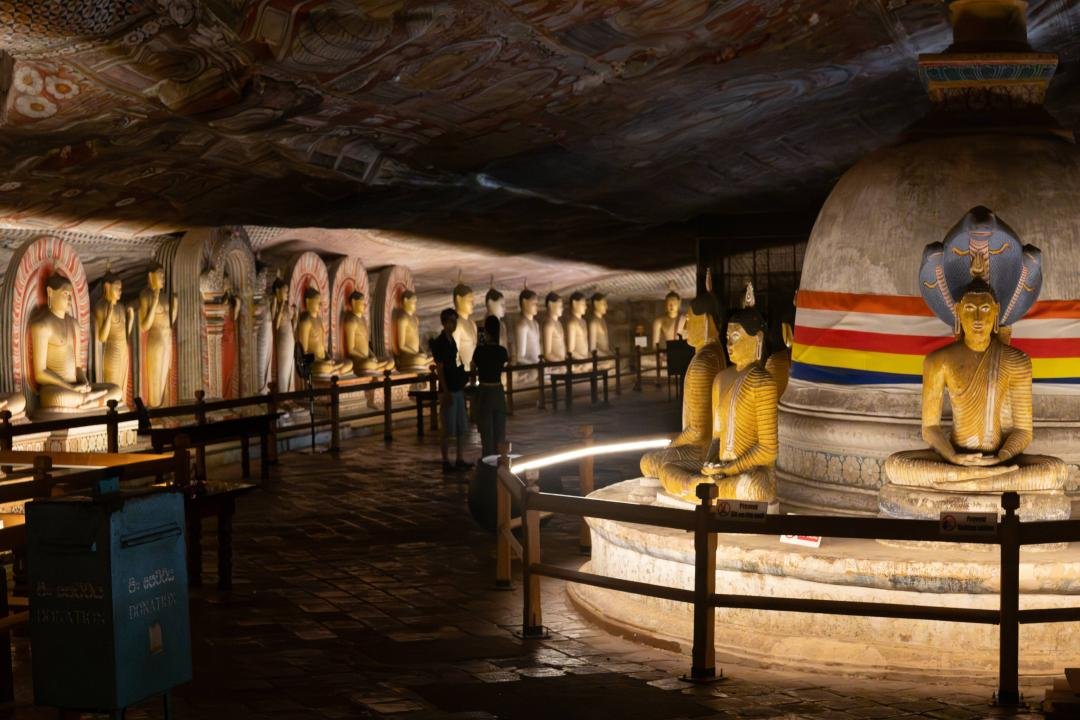
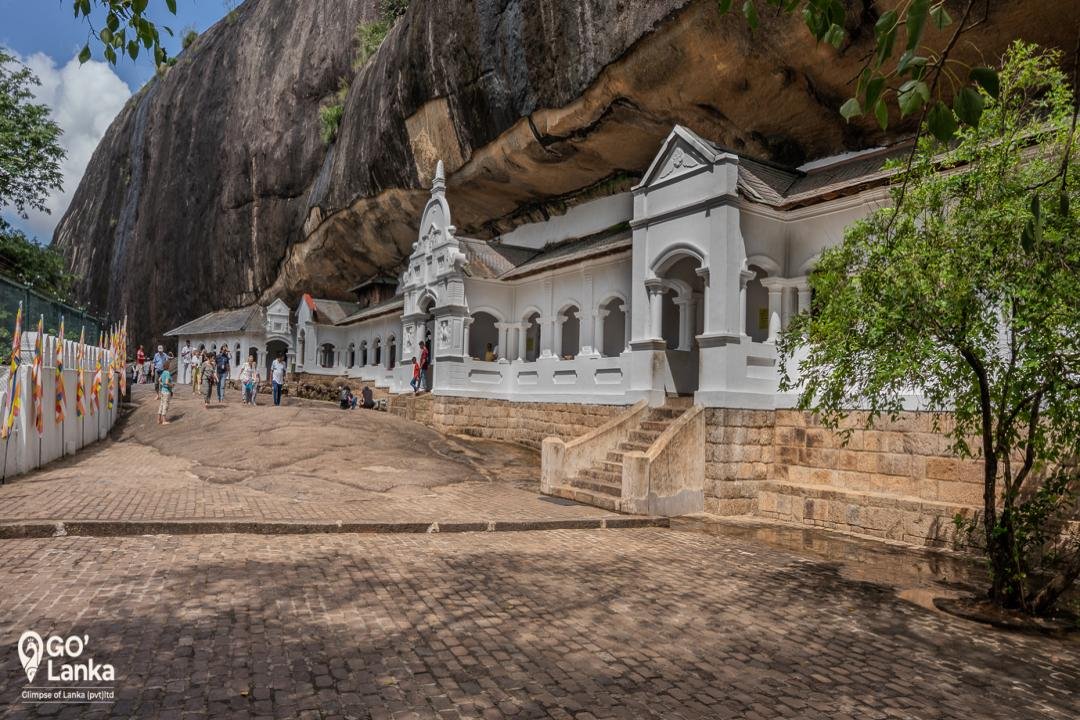
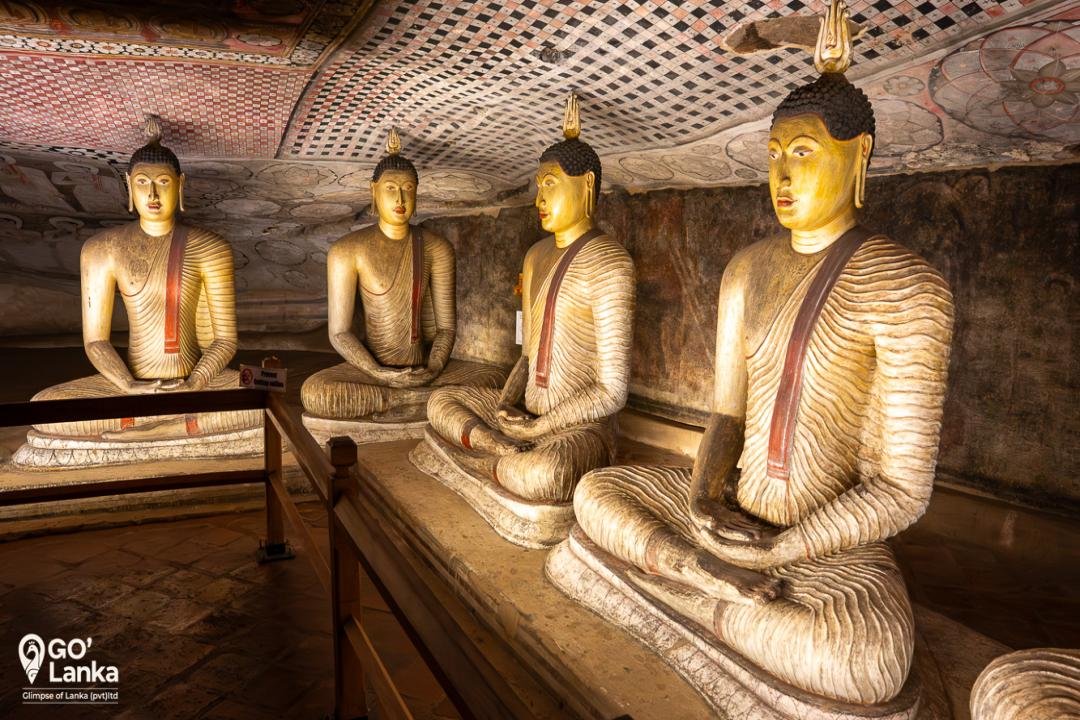
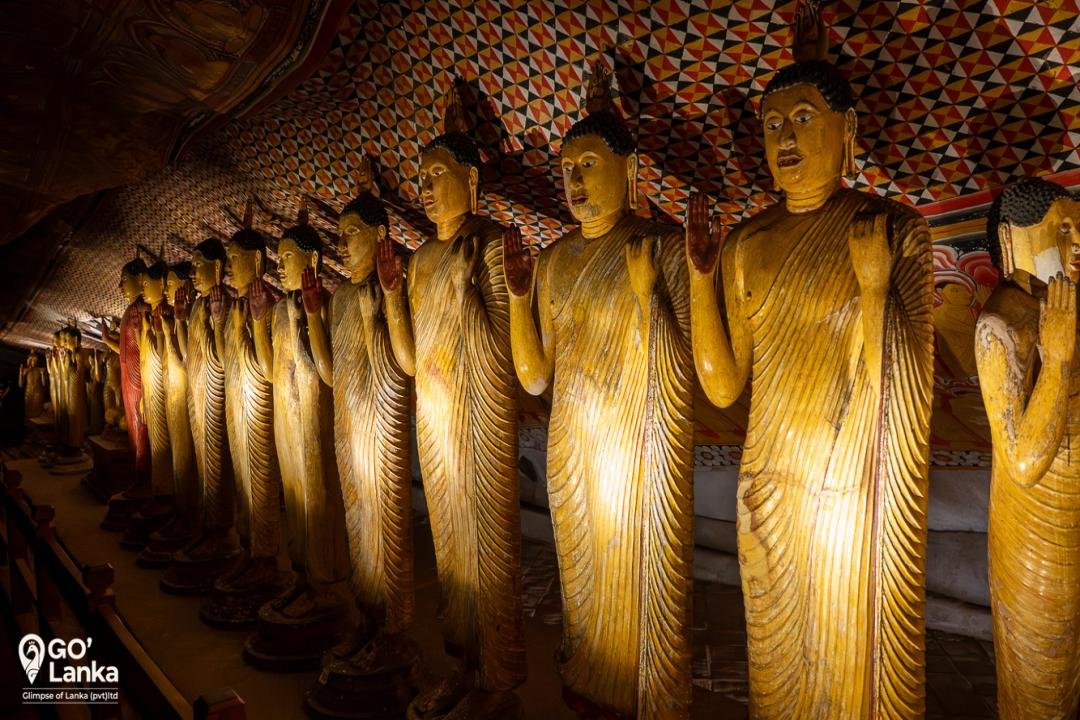
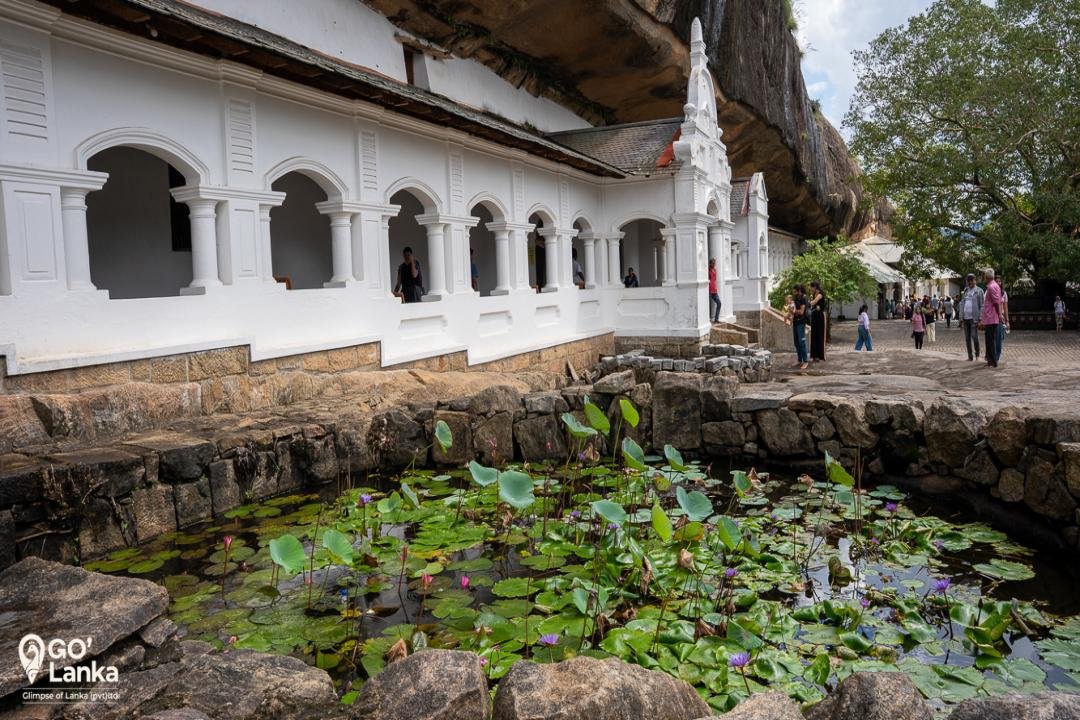
Dambulla Cave Temple is one of the most remarkable sights in Sri Lanka. Built into a huge granite rock that rises 160 metres above the surrounding plains, this UNESCO World Heritage Site has welcomed pilgrims and visitors for more than two thousand years. Inside its five caves, you will find over 150 statues of the Buddha, painted ceilings covering thousands of square metres, and a story that stretches back to an exiled king who took refuge here in the 1st century BC.
For travellers exploring Sri Lanka's Cultural Triangle, Dambulla Cave Temple is a must see stop. It sits close to Sigiriya and within easy reach of Kandy, making it simple to combine with other highlights of a Sri Lanka tour. This guide will walk you through the history, the five caves, the art inside them, and practical tips to help you get the most from your visit.
Where Is Dambulla Cave Temple?
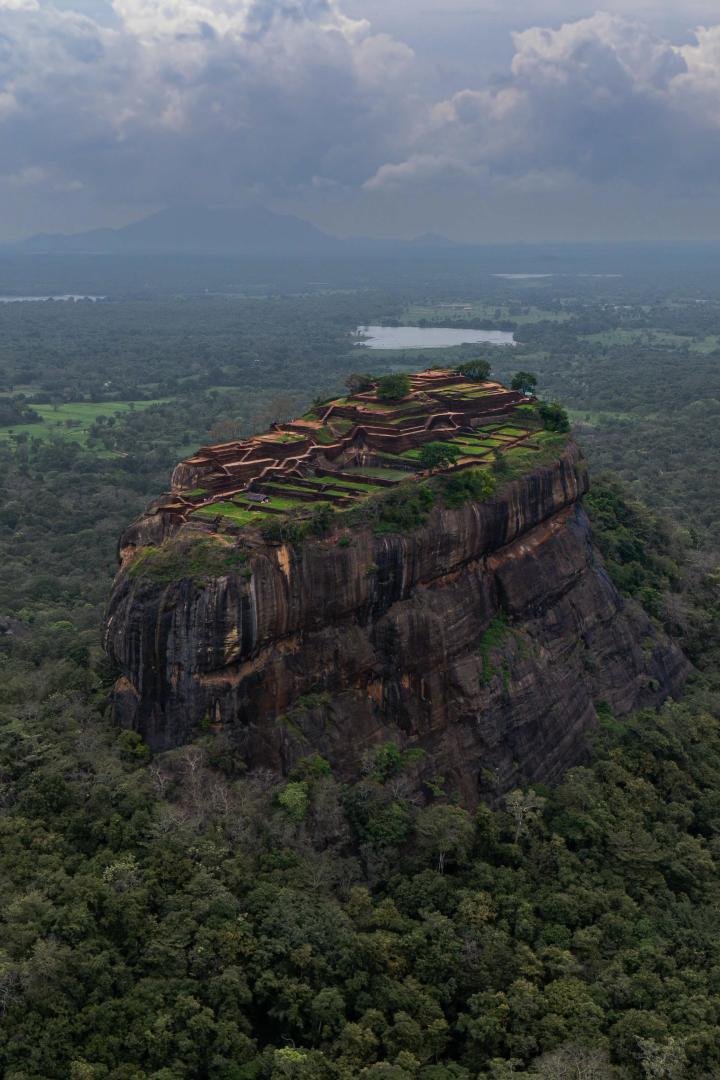
Dambulla Cave Temple is located in central Sri Lanka, just outside the town of Dambulla. The rock stands alone, separate from the famous Sigiriya rock fortress, though the two are usually visited together as part of a Cultural Triangle tour.
A Brief History of Dambulla Cave Temple
The story of Dambulla begins long before it became a temple. The caves were first used as shelter by Buddhist monks, and ancient Brahmi inscriptions found at the site date back to the 1st century BC. One inscription, carved beneath the drip ledge of the main cave, records that King Saddhatissa (137 to 119 BC) gave the cave to monks “of the four quarters, present and future.”
The most famous chapter of Dambulla's history involves King Valagamba, also known as Vattagamini Abhaya. According to tradition, South Indian invaders drove him out of Anuradhapura in 103 BC. He fled to Dambulla and lived in these caves for fourteen years while he gathered an army. When he returned to power, he kept his promise to the temple and had the caves carved and decorated as places of worship, laying the foundation for what we see today.
Over the following centuries, Dambulla grew steadily. King Nissanka Malla added gilded statues in the 12th century. The largest changes came during the Kandyan period in the 17th and 18th centuries, when most of the paintings we admire today were created. King Keerthi Sri Rajasinha funded major work on the temple in 1749, and the site has been carefully maintained ever since, including a major conservation project supported by UNESCO between 1982 and 1996.
In 1991, UNESCO declared Dambulla a World Heritage Site, recognising it as the largest and best preserved cave temple complex in Sri Lanka, and one of the most important collections of Buddhist art in the world.
The Five Caves of Dambulla
Dambulla is often described as one cave, but it is actually a single long rock shelter divided into five separate shrine rooms. Each one has its own character, history and highlights.
Cave 1: Devaraja Lena (Temple of the Divine King)
This is the oldest shrine in the complex. The main feature is a reclining Buddha statue, 15 metres long, carved directly from the rock. It shows the Buddha in Parinirvana, his final passing away, with his loyal disciple Ananda seated near his feet. Behind the statue, you can see some of the oldest paintings in Dambulla, though centuries of smoke from oil lamps and incense have faded them. A statue of the Hindu god Vishnu stands near the Buddha's head, a sign of how Hindu and Buddhist traditions have mixed in Sri Lanka over time.
Cave 2: Maharaja Lena (Cave of the Great Kings)
This is the largest and most impressive of the five caves, measuring around 52 metres long and 23 metres wide. It takes its name from statues of two kings found inside, Valagamba and Nissanka Malla, making this the only cave in Dambulla with royal portrait statues.
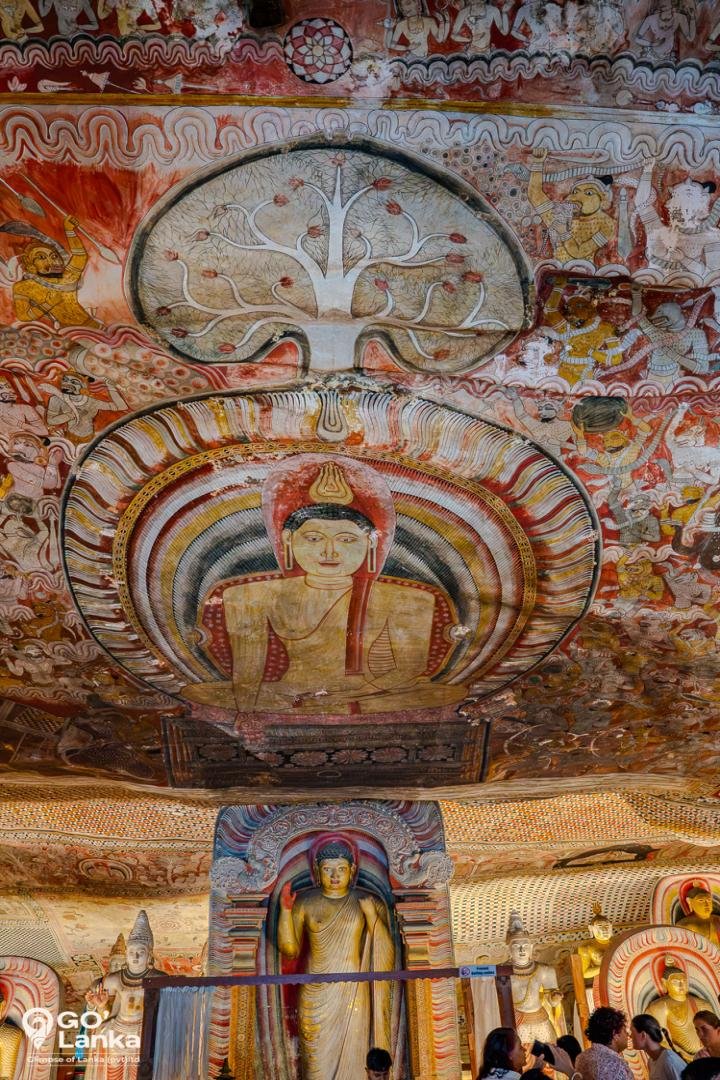
Inside, you will find around 60 statues, including a striking standing Buddha beneath a dragon arch, known as a makara torana. Look up, and you will see one of Dambulla's best known curiosities: a crack in the ceiling from which water drips steadily into a bowl below, even during dry spells. Local tradition holds that this water never runs dry and is used in temple rituals to this day.
The ceiling and walls here are covered with detailed paintings telling stories from Sri Lankan history and Buddhist teachings. Look out for scenes showing the legendary battle between King Dutugemunu and King Elara, the arrival of the sacred Bodhi Tree, and a large mural known as Mara Parajaya, which shows the Buddha overcoming temptation and doubt on the night of his enlightenment.
Cave 3: Maha Aluth Vihara (The Great New Temple)
Built during the reign of King Keerthi Sri Rajasinha in the 18th century, this cave has a more open, tent like feel. Its centrepiece is a colossal reclining Buddha around 9 metres long, along with dozens of seated and standing Buddha statues. The ceiling is covered with rows of seated Buddha figures, representing the Mahayana idea of countless Buddhas across time.
Cave 4: Pachchima Vihara (The Western Temple)
Smaller and quieter than the others, this cave is centred around a painted stupa. Local legend says it once held jewellery belonging to Queen Somawathie, wife of King Valagamba, which is why it is sometimes called the Soma Chetiya.
Cave 5: Devana Aluth Viharaya (The Second New Temple)
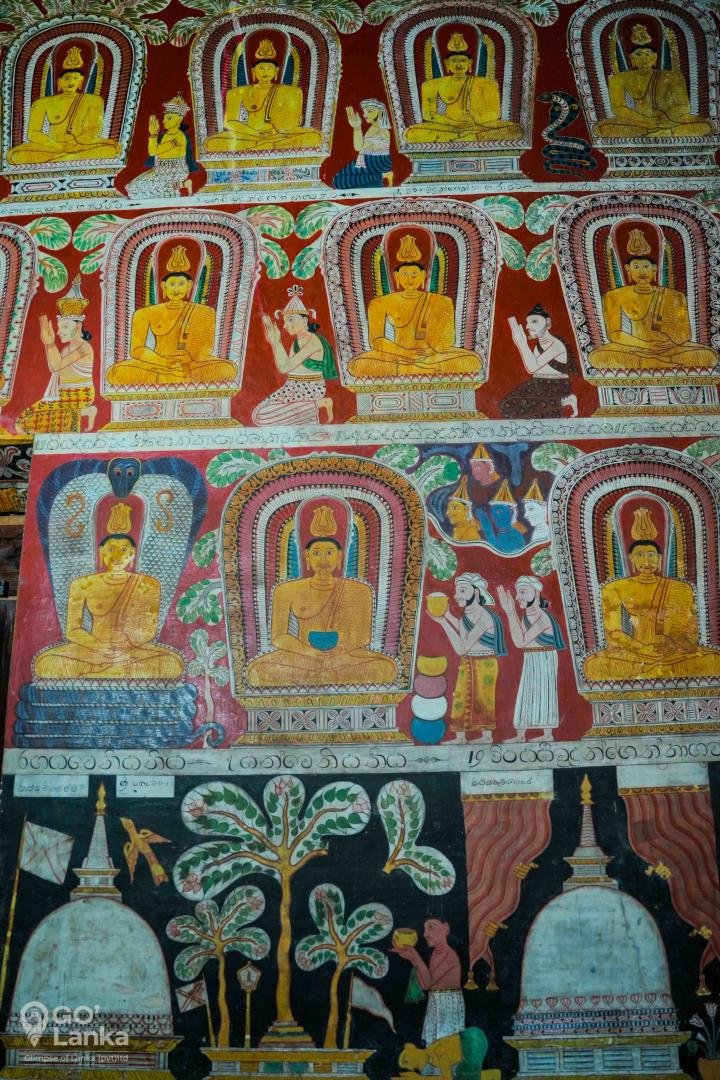
The newest of the five caves, this space was once used as a storehouse before being converted into a shrine. Its main feature is a ten metre reclining Buddha, along with smaller standing and seated figures. A painting of the cobra king Muchalinda sheltering the Buddha can also be found here, a scene repeated in several caves at Dambulla.
The Paintings of Dambulla
Dambulla is home to one of the largest collections of cave paintings anywhere in the world, covering well over 2,000 square metres of wall and ceiling space. Most of what visitors see today dates from the 18th century, painted using a technique known as “Tempera”, where natural pigments were applied to a dry plaster surface made from clay and sand.
All the colours came from natural sources found in Sri Lanka. Artists used red ochre and cinnabar for red, yellow ochre for yellow, soot and burnt cotton for black, and kaolin clay for white. Blue came from the indigo plant, ground with king coconut water. These paintings were created by hereditary artist families known as “Sittara”, who passed their skills and techniques down through generations, and whose descendants still practise traditional mural painting in the area today.
The murals are arranged with purpose. Generally, paintings on one side show events from Sri Lankan Buddhist history, paintings in the centre focus on the Buddha's core teachings, and paintings on the other side illustrate scenes from the Buddha's own life, from his birth and early years through to his enlightenment and passing.
Buddhist and Hindu Influences Side by Side
One of the most interesting things about Dambulla is how clearly it shows the blending of Buddhist and Hindu traditions in Sri Lanka. During the Kandyan period, rulers with strong South Indian connections supported both religions, and this is reflected in the art.
You will see statues of Hindu gods such as Vishnu and Saman standing alongside images of the Buddha, both treated as protectors of the Buddhist teaching. Buddha statues from this period also changed in style, with fuller lips, open eyes and elaborate haloes, reflecting the influence of Hindu ideas about divine kingship. Bodhisattva figures such as Avalokiteshvara, recognised by a small Buddha image in their headdress, also appear in Cave 2, a reminder that Mahayana Buddhism once had a presence in Sri Lanka alongside the dominant Theravada tradition.
Practical Tips for Visiting Dambulla Cave Temple
Dambulla is an active place of worship, not just a historic site, so a few simple preparations will make your visit smoother and more respectful.
Dress Code
As with all Buddhist temples in Sri Lanka, modest dress is required. Shoulders and knees should be covered for both men and women. Shorts, sleeveless tops and short dresses are not allowed inside the caves. Many visitors carry a light scarf or sarong, which is easy to wrap over shorts or a dress if needed. You will also need to remove your shoes and any hat or cap before entering, so wear footwear that is simple to take on and off.
Opening Hours and Best Time to Visit
Dambulla Cave Temple is generally open daily from around 7 am to 7 pm. The early morning hours, before 9 am, are the coolest and quietest time to visit, with soft light that is lovely for photographs. Late afternoon, from around 4 pm onwards, is another good option, especially if you want to enjoy golden light and a calmer atmosphere as the day cools down. The middle of the day can be very hot, and the stone steps leading up to the caves can become uncomfortably warm underfoot, so it is best avoided if possible.
Sri Lanka's dry season, from December to April, generally offers the clearest skies for visiting. Between May and November, occasional rain showers are more likely, and the steps up to the caves can become slippery, so a good grip on your shoes is helpful at this time of year.
Getting to the Caves
From the entrance area, it is a walk uphill of around 15 to 20 minutes along stone steps to reach the caves. The path is not technically difficult, but it is steep in places and can be tiring in the heat, so take your time, wear comfortable shoes, and carry water with you. Most visitors spend between one and two hours exploring all five caves, depending on how much time they want to spend admiring the paintings and statues.
Other Things to Know
- Monkeys are common around the site, so keep a close eye on bags, food and loose items, including shoes left at the entrance.
- Photography is generally allowed inside the caves, but it is considered disrespectful to pose for photos with your back turned to a Buddha statue.
- As Dambulla remains an active monastery, visitors are asked to keep their voices low and move calmly, particularly if monks are present.
- At the base of the rock, the Golden Temple building, topped with a large seated Buddha statue, is also worth a quick look, along with the small museum nearby.
Why Dambulla Belongs on Your Sri Lanka Itinerary
Dambulla Cave Temple offers something rare: a single site where you can see over two thousand years of continuous history, faith and artistic skill in one place. From the story of an exiled king who kept his word, to hereditary painters whose techniques have barely changed in centuries, every part of Dambulla has a story behind it.
For travellers building a Sri Lanka itinerary, Dambulla pairs naturally with Sigiriya, Kandy and the wider Cultural Triangle. Its central location makes it easy to include without adding much extra travel time, while its depth of history rewards even a short visit.
If you would like help planning a route that includes Dambulla Cave Temple along with other highlights of Sri Lanka, our team at Glimpse of Lanka can put together a tailor-made itinerary based on your interests, pace and travel dates. Simply fill in our tailor-made itinerary form, and we will help you build a trip that brings Sri Lanka's history and culture to life.