
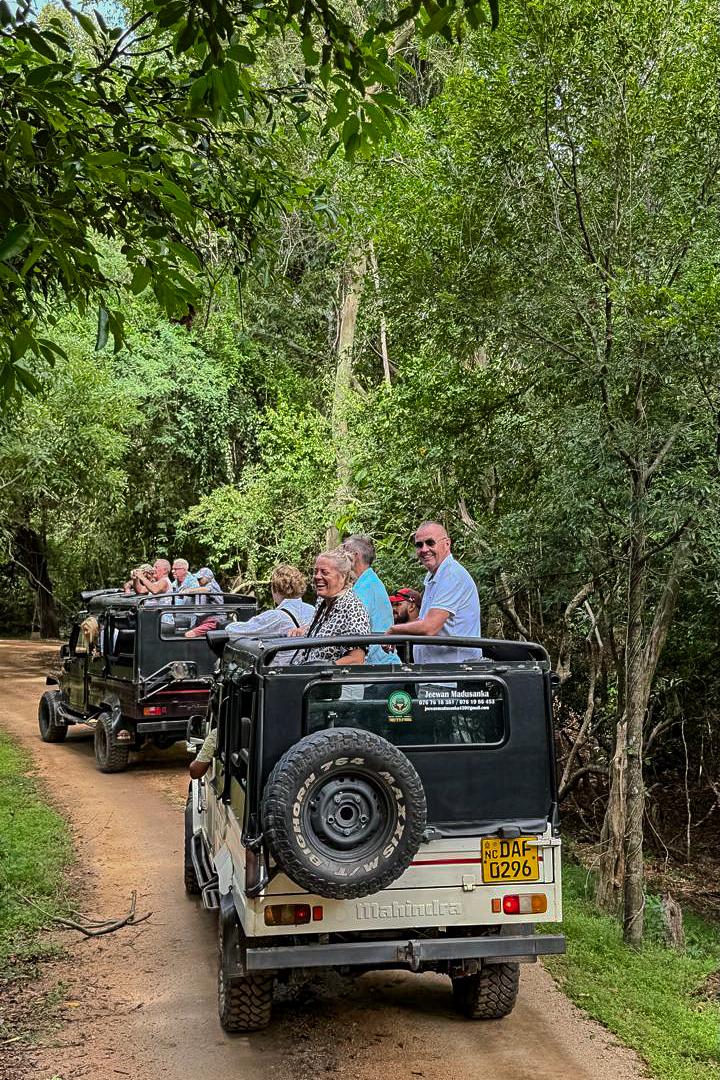
Sri Lanka is a global biodiversity hotspot. Despite covering only 65,610 square kilometres, the island holds one of the highest rates of endemism in the world.
The numbers tell the story:
- ◦ Around 4,000 flowering plant species, with about 894 found nowhere else on earth
- ◦ 140 mammal species, including the Sri Lankan elephant, the Sri Lankan leopard, and the sloth bear
- ◦ 435 bird species, with 26 endemic to the island
- ◦ 174 reptile species and over 120 amphibian species, most of which are endemic
- ◦ 23% of flowering plants and 16% of mammals are endemic
This richness is shaped by the island's geography. The wet zone in the southwest receives over 2,500 mm of rain a year and supports rainforests like Sinharaja. The dry zone in the north, east, and southeast gets between 1,200 and 1,900 mm of rain, creating the open scrub, lakes, and grasslands that wildlife loves.
Most of Sri Lanka's safari parks lie in the dry zone. The vegetation is open, the visibility is excellent, and animals gather around tanks and reservoirs built by ancient kings over a thousand years ago. This combination of nature and human heritage is what makes a Sri Lankan safari unlike any other.
Why Sri Lanka is a world class safari destination;
Sri Lanka offers the highest leopard density on earth, the largest gathering of wild Asian elephants on the planet, and the highest density of elephants in Asia. Few countries can claim all three. You also get something rare in the safari world variety in a small space. From Yala to Udawalawe is a two hour drive. From Minneriya to Wilpattu is around four hours. You can see leopards in the morning and elephants the next day, with a UNESCO heritage site in between. Sri Lankan parks are also affordable, well managed by the Department of Wildlife Conservation, and accessible to all kinds of travellers, families, photographers, honeymooners, and budget backpackers alike.
Here is a quick comparison to help you decide which park suits your trip.
Yala National Park: The Land of Leopards
Yala is Sri Lanka's most famous national park and one of the best places in the world to see wild leopards.
➢ Location: Southeastern corner of the island, bordering the Indian Ocean.
➢ Size: 979 square kilometres, divided into five blocks.
➢ Established: 1900 (wildlife sanctuary), 1938 (national park).
What You'll See
Yala is best known for the Sri Lankan leopard (Panthera pardus kotiya), an endemic subspecies and the apex predator of the island. Block 1 holds one of the highest leopard densities recorded anywhere, close to one leopard per square kilometre in prime areas.
Leopards in Yala behave differently from those in Africa or India. With no lions or tigers to compete with, they hunt during daylight, rest openly on rocks, and sometimes cross jeep tracks without a glance.
Yala also holds:
- ◦ 44 mammal species, including Sri Lankan elephants, sloth bears, sambar deer, spotted deer, and wild boar
- ◦ Wild water buffalo and mugger crocodiles at the lagoons
- ◦ 215 bird species, six of which are endemic
- ◦ Painted storks, peacocks, Malabar pied hornbills, and migratory waders
Practical Tips
- ◦ Block 1 has the highest sighting rate but also the most jeeps. Expect "jeep jams" near a leopard.
- ◦ Block 5 offers a quieter, more authentic experience with fewer vehicles.
- ◦ Closed period: Block 1 closes from early September to mid October each year for restoration. Other blocks remain open.
- ◦ Best months: February to July, during the dry season.
- ◦ Morning safaris are best for leopards. Start at the gate by 5.30 am.
Best Pair
Yala fits naturally into a southern coast itinerary. Combine it with Galle Fort, Mirissa whale watching, or a stop in Ella for the train and tea estates.
Udawalawe National Park: The Heart of Wild Elephants
If you want a guaranteed elephant experience, Udawalawe is the park to choose.
➢ Location: Southern dry zone, in the foothills of the central highlands.
➢ Size: 308 square kilometres.
➢ Established: 1972, originally as a sanctuary for elephants displaced by the Udawalawe Reservoir.
What You'll See
Udawalawe is built around the Udawalawe Reservoir. The land is open scrubland and grassland, which gives the park the feel of an African savanna. Most importantly, it is home to a resident population of 600 to 700 Sri Lankan elephants.
Sightings are almost guaranteed. On a typical safari, you will see elephant herds of 5 to 50 individuals, mothers with calves, large bulls, and bathing groups at the waterholes.
Other wildlife includes:
- ◦ Water buffalo, sambar deer, spotted deer, and wild boar
- ◦ Mugger crocodiles and monitor lizards
- ◦ Golden jackals, mongoose, and toque macaques
- ◦ 183 bird species, including peacocks, painted storks, and grey-headed fish eagles
- ◦ Leopards (present, but very rarely seen)
The Elephant Transit Home
Just outside the park boundary stands the Elephant Transit Home (ETH), a rehabilitation centre run by the Department of Wildlife Conservation. Orphaned elephant calves are raised here with minimal human contact, then released back into Udawalawe at around five years of age.
Public feeding times are held daily. The 9.00 am, 12.00 noon, and 2.00 pm sessions are the most popular. Watching baby elephants drink milk from giant bottles is one of the most moving wildlife scenes in Sri Lanka.
The ETH is a true rehabilitation programme, not a tourist attraction with permanent captive elephants. This is the ethical choice for visitors who care about wildlife welfare.
Practical Tips
- ◦ Year round sightings, as the resident herd does not migrate.
- ◦ Morning safaris are cooler, but afternoon safaris bring better photo light.
- ◦ The park is less crowded than Yala.
- ◦ Allow time for a visit to the Elephant Transit Home after your safari.
Best Pair
Udawalawe fits perfectly between Ella and the southern beaches. It is the easiest safari to fit into a hill country to coast itinerary.
Wilpattu National Park: Sri Lanka's Largest Wilderness
Wilpattu is the largest national park in Sri Lanka and one of its oldest. For decades, the park was closed during the civil war and only reopened in 2010. Today, it offers the most peaceful safari experience in the country.
➢ Location: Northwest coast, between Puttalam and Anuradhapura.
➢ Size: 1,316 square kilometres.
➢ Established: 1938.
What You'll See
The name Wilpattu comes from the Sinhala word for the natural sand rimmed lakes that fill the park. These lakes, called villu, are scattered throughout the forest and attract wildlife year round.
Wilpattu is best known for:
- ◦ Sri Lankan leopards: the population here is healthy and stable, with sightings often calmer and longer than in Yala
- ◦ Sloth bears, especially in May and June, when Palu fruit ripens
- ◦ Sri Lankan elephants in the western and northern sectors
- ◦ Spotted deer, sambar, water buffalo, and wild boar
- ◦ Over 210 bird species, including endemics like the Sri Lankan jungle fowl
The forest cover is denser than in Yala or Udawalawe. This means leopard sightings are less frequent, but each encounter feels wilder and more authentic.
Practical Tips
- ◦ Far fewer vehicles than in Yala. Sometimes you will be the only jeep at a sighting.
- ◦ Best months: February to October.
- ◦ The park is large, and game drives often cover long distances. Pack water, snacks, and patience.
- ◦ The villu are the best places to spot wildlife at dawn and dusk.
Best Pair
Wilpattu pairs beautifully with Anuradhapura, the first ancient capital of Sri Lanka. A two day combination of sacred ruins and wild leopards is one of the most rewarding short itineraries on the island.
Minneriya National Park: The Great Elephant Gathering
Minneriya is small in size but home to one of the greatest natural spectacles on earth, The Gathering, the largest seasonal congregation of wild Asian elephants in the world.
➢ Location: North Central Province, near Habarana, in the heart of the Cultural Triangle.
➢ Size: 88.9 square kilometres.
➢ Established: Sanctuary in 1938, national park in 1997.
What You'll See
Minneriya is built around the Minneriya Tank, an enormous reservoir constructed by King Mahasena in the 3rd century AD. Between July and October, as water sources dry up across the dry zone, elephants migrate to the tank from neighbouring parks like Wasgamuwa and Kaudulla.
At the peak of the season, August and September, up to 300 elephants gather around the receding lake bed. Some reports place the figure even higher. They graze on fresh grass, bathe, socialise, and search for mates. It is one of the most extraordinary wildlife events in Asia.
Outside the Gathering season, Minneriya is quieter but still rewarding. The park is also home to:
- ◦ 24 mammal species, including sambar deer, sloth bears, and leopards
- ◦ 160 bird species, including the painted stork and grey-headed fish eagle
- ◦ Toque macaques and purple faced langurs
Practical Tips
- ◦ Best months: July to October, with peak in August and September.
- ◦ Afternoon safaris are best, as elephants emerge from the forest in the late afternoon.
- ◦ During wet years, elephants may move to Kaudulla National Park (just 20 km north) instead. A good guide will check ahead and choose the right park on the day.
- ◦ Minneriya is the easiest safari to combine with Sigiriya, Polonnaruwa, and Dambulla, all within an hour's drive.
Best Pair
Minneriya is the natural safari for travellers exploring the Cultural Triangle. A morning at Sigiriya or Polonnaruwa, followed by an afternoon safari at Minneriya, makes for one of the finest single-day experiences in Sri Lanka.
Other National Parks Worth Knowing
If you have extra time or want to escape the more famous routes, four other parks deserve a mention.
✦ Kaudulla National Park: Just north of Minneriya. Often holds the elephant herds when the Minneriya tank is full. A reliable backup during the migration season.
✦ Bundala National Park: A coastal wetland near Tissamaharama. Sri Lanka's first Ramsar wetland site and one of the best birdwatching destinations in the country. Greater flamingos arrive between September and March.
✦ Kumana National Park: On the eastern edge of Yala, far quieter and rich in birdlife. A hidden gem for serious birders and photographers.
✦ Lunugamvehera National Park: A vital corridor connecting Yala and Udawalawe. A young park that is gaining attention for its growing elephant population and undisturbed wilderness.
For travellers with seven days or more, combining one major park with one of these lesser known reserves makes the trip feel deeper and more authentic.
Choosing the Right Safari for You
If you want to see leopards → Yala is your first choice. Wilpattu is the quieter alternative.
If you want to see wild elephants → Udawalawe gives the best year-round chance. Minneriya gives the most spectacular seasonal sight.
If you are travelling with children → Udawalawe is the easiest and most reliable. Sightings are quick, the terrain is open, and the Elephant Transit Home is a hit with families.
If you are a photographer → Yala (Block 5) and Wilpattu offer the best balance of quality sightings and quiet conditions.
If you only have one safari day → Match your park to your route. Travelling the south? Yala or Udawalawe. Visiting the Cultural Triangle? Minneriya. Heading north? Wilpattu.
If you want a multi-park experience → Combine Udawalawe and Yala for the south, or Minneriya and Wilpattufor the north. Both pairs work as a complete wildlife journey.
Practical Safari Tips for Sri Lanka
What to wear
- ◦ Light, neutral coloured clothing (khaki, beige, olive)
- ◦ A hat with a wide brim
- ◦ Closed shoes
- ◦ A light jacket for early mornings
What to bring
- ◦ Sunscreen, mosquito repellent, sunglasses
- ◦ Plenty of water and light snacks
- ◦ A camera with at least a 200 mm lens for wildlife photography
- ◦ Binoculars for birdwatching
Safari etiquette
- ◦ Stay quiet inside the park
- ◦ Never leave the vehicle unless your guide says it is safe
- ◦ Do not feed any animal
- ◦ Keep a respectful distance from elephants and leopards
Booking advice
- ◦ Always book a safari with a licensed operator and a trained naturalist guide
- ◦ Morning safaris (typically 6.00 am to 10.00 am) often deliver the best sightings
- ◦ Two safaris in the same park usually double your chances of major encounters
- ◦ Avoid weekends and Sri Lankan public holidays when possible
Plan Your Sri Lanka Safari with Glimpse of Lanka
The right safari for you depends on your route, your interests, and your travel season. That is where local planning makes all the difference.
At Glimpse of Lanka, our team of Sri Lankan guides and naturalists designs safari tours that match your wildlife dreams to the right park, the right block, and the right time of day. We work only with licensed jeep operators, experienced trackers, and ethical wildlife partners.
Contact Glimpse of Lanka today for a tailored safari itinerary built around your dream journey. Whether you want a single half-day game drive or a full multi-park wildlife tour, we will design a trip that feels truly your own.